ERSA Publications

Connect to Work

Provider Reflections on Devolved Employment Support Commissioning

Connect to Work is the largest ever attempt to devolve employment support in England and Wales, with £1.18 billion of funding commissioned locally through 49 Accountable Bodies. With the Government committed to devolving employment support to mayors, it is an important early test of how national funding can be delivered through more localised commissioning.

This report draws on ERSA’s survey of providers to capture what commissioning looked like from the delivery side. It highlights examples of good practice, including early market engagement, adaptable commercial models and strong local referral networks, alongside challenges around unviable payment models, inconsistent procurement, fragmented lotting, unrealistic timescales and delivery infrastructure that wasn’t ready at launch. The result has been very uneven access, with some areas still yet to go fully live.

The report calls for clear national parameters alongside local flexibility, support to build commissioning capability, sustainable funding frameworks and transitions planned around service continuity, so that people are not left without support. It includes recommendations for national government, local commissioners and providers, and an appendix mapping commercial models and go-live dates across every delivery area.
Youth Employment Portfolio

A Showcase of Employment Support

The ERSA Youth Employment Portfolio showcases over 80 youth employment programmes that are currently being delivered or have been delivered in recent years, outlining their approach and the outcomes achieved to date.

It illustrates the breadth of youth employment provision that exists across the country, showcasing a wide variety of types of support and delivery organisations. Provision includes a range of interventions and includes examples of organisations delivering large national programmes such as the Restart Scheme as well as more localised or specialist provision.

Overall, many existing approaches have achieved significant success and could be scaled up if provided with sufficient, long-term funding. The examples showcased here should be considered alongside the historic provision examined in ERSA’s ‘Delivering Better Futures’ report to demonstrate the role of the employment support sector in supporting young people into employment, education and training and what lessons have already been learned.

Delivering Locally at National Scale

Building on what works to successfully devolve employment support

This report argues that devolution presents an opportunity to bring employment support closer to local communities and labour markets – but cautions against creating a fragmented system that could lead to inconsistencies in service quality, outcomes and access across different parts of the country. 

Drawing on evidence from 24 organisations across the employability sector, the report examines how nationally commissioned programmes have successfully combined local delivery with national scale, supporting millions of people into and towards work while generating significant value for participants, taxpayers and wider society. 

The report argues that policymakers should avoid viewing devolution as a choice between national and local delivery. Instead, it sets out a vision for a balanced model that combines the benefits of local integration and flexibility with national standards, accountability and economies of scale. 

As government moves ahead with plans to devolve employment support, the employment support sector is ready to support the transition, bringing decades of expertise, delivery experience and local insight to help make devolution a success. 

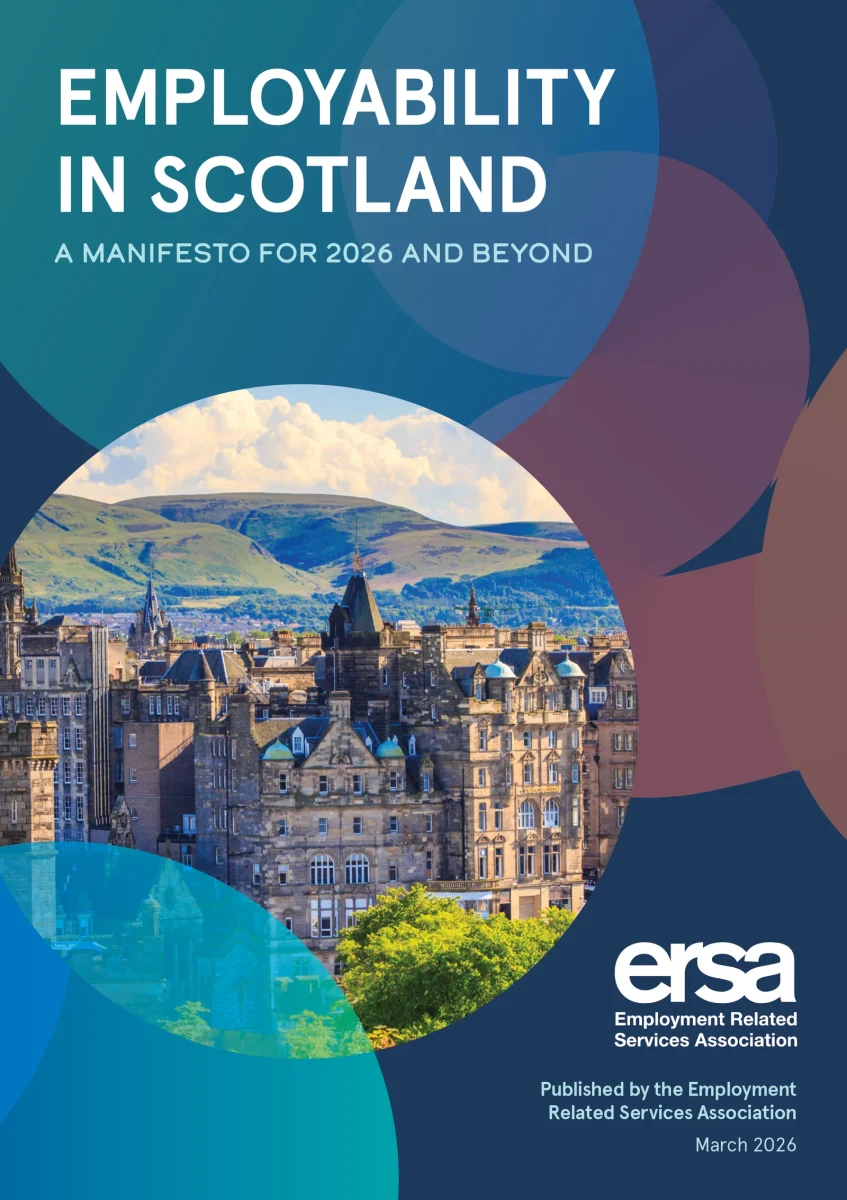
Employability in Scotland

A Manifesto for 2026 and Beyond

The Employment Related Services Association (ERSA) is the trade body and membership organisation representing the employment support sector across the UK. Our members deliver frontline employability and skills support, working with people who face the greatest barriers to work and supporting employers to recruit and retain a diverse workforce.

Across Scotland, ERSA members and other providers have decades of experience delivering programmes, beginning with the Youth Training Scheme in the 1980s, and followed by New Deal in the 1990s and the Work Programme, European Social Fund and Fair Start Scotland throughout the 2010s and 2020s, to name a handful.

According to PwC, Scotland has a NEET rate (young people not in employment, education, or training) of 16%, higher than large cities and regions in England. Additionally, lone parents, individuals who have been in the criminal justice system, and minority ethnic groups suffer much worse labour market outcomes than their counterparts. As outlined above, this has a detrimental impact on the individuals themselves, local economies, and public services that are already under-pressure.

As Scotland approaches the 2026 Holyrood election, ERSA is calling on all parties to commit to a renewed, long-term vision for employability. Our recommendations are underpinned by five core themes.

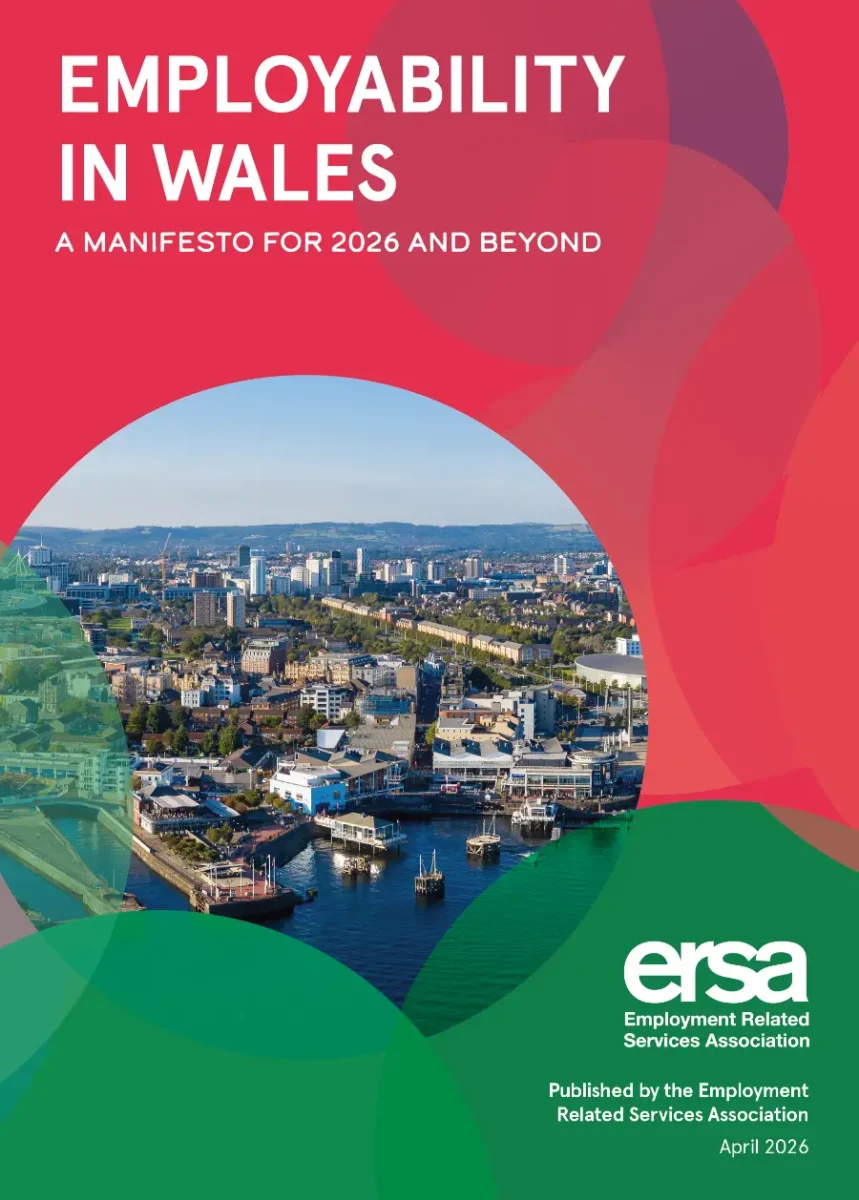
Employability in Wales

A Manifesto for 2026 and beyond

We’re calling for everyone in Wales to have the right to access high‑quality employment support, delivered through a system that works effectively for individuals, employers, and providers.

Our members in Wales have delivered employability programmes for decades. Today, they deliver a wide range of provision, including Restart, Jobs Growth Wales+, Connect to Work, the UK Shared Prosperity Fund, the Out of Work Service, and the In Work Support Service. Collectively, they bring deep expertise in supporting people into work and engaging employers across the country.

Good work is fundamental to people’s wellbeing, while being out of work is associated with poorer social and economic outcomes. An effective employability system not only supports individuals into jobs but also reduces pressure on public services and contributes to wider economic growth.

If Wales is to match the UK average employment rate (75.1%), an additional 62,500 people will need to be supported into work.

However, there are some stubborn labour market challenges that the next government needs to tackle to achieve this:

  • Economic inactivity is higher in Wales than in the rest of the UK.
  • There are stark regional disparities in labour market outcomes, particularly in former industrial and rural areas.
  • Women and people from ethnic minority groups are more likely to be economically inactive than men.
  • Seventeen per cent of 16- to 24-year-olds (around 57,500 young people) are not in education, employment or training.

The next Senedd term presents a clear opportunity to build a more joined‑up and accessible system that works better for individuals, employers, and providers alike.

This manifesto sets out ERSA’s priorities for achieving that ambition.

AI in Employability

Opportunities, challenges and the road ahead

This white paper explores how Artificial Intelligence (AI) can support employability services to become more responsive, personalised, and efficient.

Drawing on workshop insights, participant journey mapping, and survey data, it identifies potential areas in current employment support delivery that represent challenges for providers and clients alike. It presents potential AI-enabled solutions that will enable the enhancement of employment support to better assist clients on their journey into the workplace of the 2030s and beyond.

The white paper outlines the opportunities, risks, and policy considerations of using AI in the employment support sector. It aims to inform policymakers at both national and devolved levels, employment support providers, and contribute to the broader public discourse on employability. By supporting evidence-based decision-making, the paper helps guide the responsible integration of AI to enhance current services and shape new approaches.

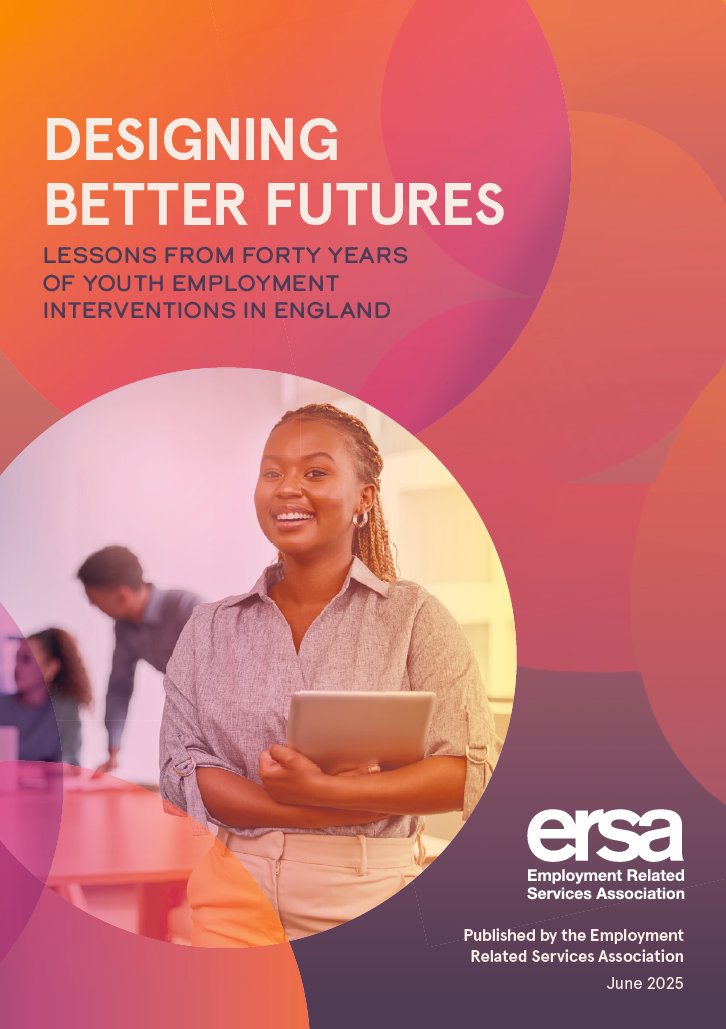
Designing Better Futures

Lessons from forty years of youth employment interventions in England

This report considers 11 youth employment programmes, spanning four decades of delivery. Its purpose is to gain a deeper understanding of the implementation of these interventions, their strengths and weaknesses, to show what works best in their design and delivery. Undertaken in 2025 by the Employment Related Services Association, the membership body of the employment and skills sector, the research and recommendations are supported by evidence from 17 semi-structured interviews with industry experts and four online roundtables, engaging 63 people in total.

This work was made possible due to Youth Employment Infrastructure Funding from Youth Futures Foundation (YFF). It funds this work in England only. ERSA may expand the remit of this research UK-wide in the future.

Based on ERSA’s findings, the report makes a series of commissioning and government policy recommendations. These aim to reduce the number of young people, aged between 16 and 24, not in education, employment or training (NEET), and to make high quality employment support accessible to all.

Off the Bench and into Work

Employability through football club charities

This report considers how Football Club charities are already delivering effective employment support, but argues that they are often under-recognised and inconsistently funded. Existing provision could be scaled up in line with government priorities if they were more widely recognised as partners and could access more sustainable funding.

The report explores both the challenges, such as the funding landscape and geographic disparities, and what is working in employment support delivery. Overall, it positions Football Club charities as anchor institutions in their communities, enabling them to successfully engage participants, including the hardest to reach, thanks to the power of the badge and their trusted place in local communities.

ERSA has conducted this research in partnership with EFL in the Community; including the sharing of data, jointly running a working group with a selection of Football Club charities, writing and distributing a survey on employment support provision, and organising in-person visits to select Football Clubs.

The recommendations provided are informed by this research, focusing on the opportunity for commissioners to partner with Football Club charities in order to scale up current delivery and make it more sustainable.

Get the ERSA newsletter

ERSA mailing list